
Judging Harriet Vane
Strong Poison as a novel of manners

Dorothy L. Sayers’ novel Strong Poison opens rather oddly. Instead of beginning with the crime, or its discovery, the story starts as the judge is summing up the evidence at the end of the trial. This is not a flashback, though. One of those watching in court, a certain Lord Peter Wimsey, has decided that the accused is not guilty, and when the jury find themselves unable to come to a unanimous decision, Wimsey takes it upon himself to investigate the case before the retrial can take place. Sayers’ unusual technique allows her to get a lot of information across to the reader about the case, without having to engineer its “discovery” via the story of the investigation. This frees her up to explore other elements of the story. Strong Poison is certainly an absorbing mystery, and there’s a neat twist at the end, but I’d like to approach it as a “novel of manners”, even as social satire. The opening scene sets up this strand of the book brilliantly, and I’d like to go through some of it here, before expanding on the idea of the “novel of manners” and how we can see it in the rest of Strong Poison.
Concerning Spoilers: almost all of this piece can be read without encountering serious spoilers. The very last bit will reveal the identity of the killer, but I’ll be sure to drop in another warning in time.
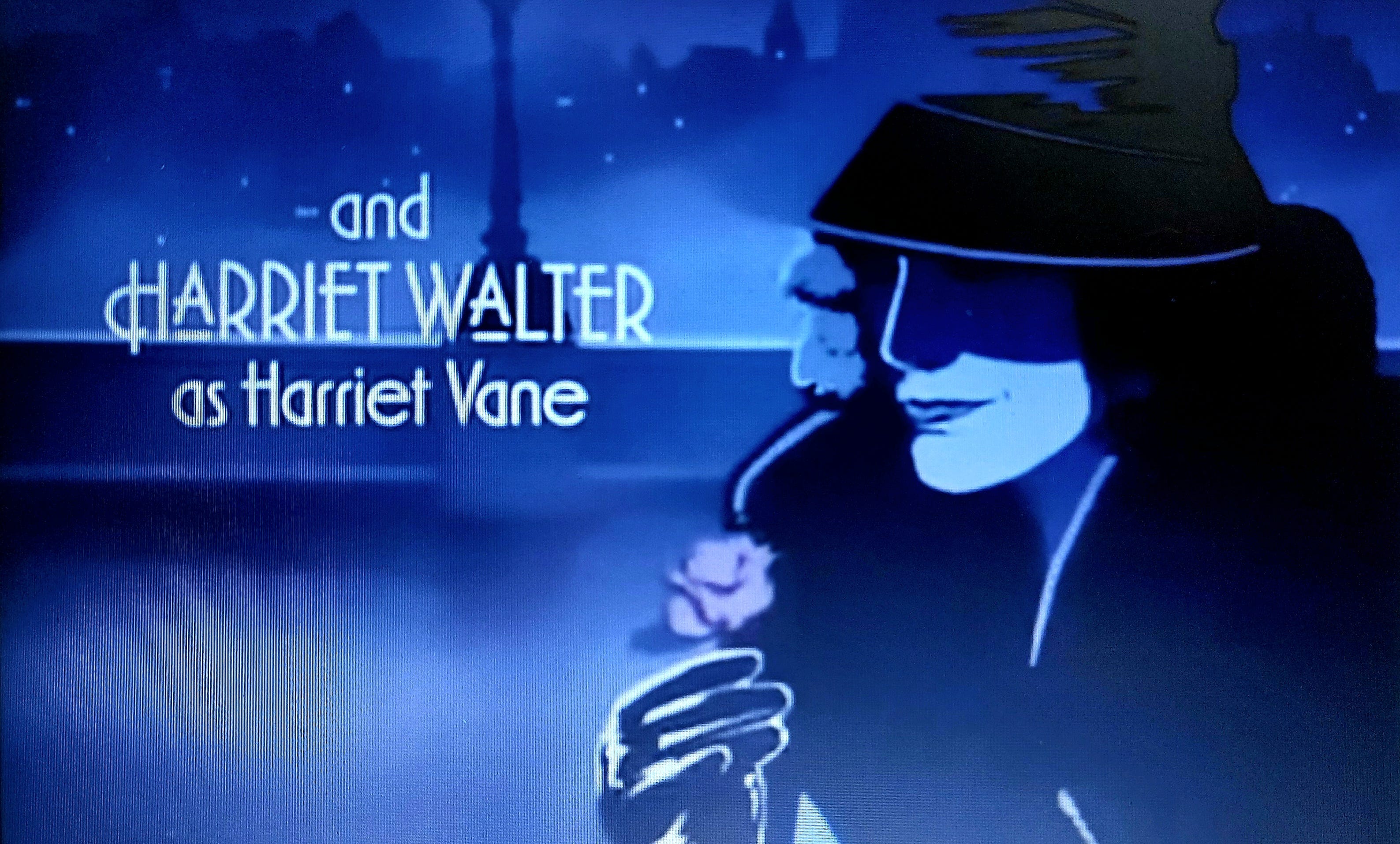
The accused being tried is a writer of detective novels, Harriet Vane, who will become a major character in Sayers’ subsequent novels. In this one she is accused of murdering her lover, another novelist named Philip Boyes, by means of arsenic in a cup of coffee. The judge fills us in on Boyes,
He was thirty-six years old, and he had published five novels and a large number of essays and articles. All these literary works were of what is sometimes called an “advanced” type. They preached doctrines which may seem to some of us immoral or seditious, such as atheism, and anarchy, and what is known as “free love”. His private life appears to have been conducted for some time at least, in accordance with these doctrines.
Harriet Vane has fallen in love with this writer of advanced opinions:
‘She has told us herself, with great candour, how she became deeply attached to Philip Boyes, and how, for a considerable time, she held out against his persuasions to live with him in an irregular manner. There was, in fact, no reason at all why he should not have married her honourably; but apparently he represented himself as being conscientiously opposed to any formal marriage. You have the evidence of Sybil Marriott and Eiluned Price that the prisoner was made very unhappy by this attitude which he chose to take up, and you have heard also that he was a very handsome and attractive man, whom any woman might have found it difficult to resist.
There is a joke in this line which the reader will only get (and may miss) later into the novel. If there is one person in this story who would have absolutely no trouble in resisting the charms of Philip Boyes, her name is Eiluned Price. According to other characters she “scorns everything in trousers” and is entirely “anti-man”, whilst Eiluned herself refers dismissively to Sylvia’s “male belongings” who expect to be provided with drinks when they visit. (The 1980s TV adaptation of the novel takes this and develops Eiluned into a suit-wearing lesbian, which is a perfectly possible reading of the character, if not required by the original text.) It is becoming clear that the judge is not at all at home in the world he is describing so energetically to the jury. He does, however, have definite opinions on that world:
‘At any rate, in March of 1928, the prisoner, worn out, as she tells us, by his unceasing importunities, gave in, and consented to live on terms of intimacy with him, outside the bonds of marriage.
‘Now you may feel, and quite properly, that this was a very wrong thing to do. You may, after making all allowances for this young woman’s unprotected position, still feel that she was a person of unstable moral character. You will not be led away by the false glamour which certain writers contrive to throw about “free love” into thinking that this was anything but an ordinary, vulgar act of misbehaviour.
[…]
You know quite well the difference between right and wrong in such matters, and you may think that, if Harriet Vane had not become to a certain extent corrupted by the unwholesome influences among which she lived, she would have shown a truer heroism by dismissing Philip Boyes from her society.
The reader’s attention is likely to be focused on the information they’re being given here, as well as how the judge’s summing-up will affect the verdict. But Sayers is introducing one of the Strong Poison’s major themes here: the code of ethics which different communities live by, and how those affect their members.
We’re no doubt used to the tendency of crime fiction in the later twentieth century to set their stories in odd little social worlds, emphasizing the internal tensions and strife created by people bound together in a small community. Caroline Grahame’s Death of a Hollow Man, set in an amateur theatre company, is one that springs to mind, but there are many, many others. Grahame’s novel is perhaps especially apt, since her work was adapted into the TV show Midsomer Murders, the epitome of the “small world” genre. So many episodes of that show can be mentally categorized as “the one about the theatre group”, “the one about the cult”, “the one about the book club”” and so on. Sayers’ own work provides some examples too, with the colony of artists in Five Red Herrings and the community gathered around the parish church in The Nine Tailors.
However, this is not quite the vein of Strong Poison. This novel is not so much about the claustrophobic atmosphere of a closed circle, but about a whole set of such circles. It’s about the very different ways people live, how their standards and ethics jar against each other, and to solve the case Wimsey must move improbably through a whole range of milieux (if that’s the plural I want.) The judge is still summing up, and he attempts to make some moral and legal distinction based on the difference of moral outlook:
‘But, on the other hand, you must be careful not to attach the wrong kind of importance to this lapse. It is one thing for a man or woman to live an immoral life, and quite another thing to commit murder. You may perhaps think that one step into the path of the wrong-doing makes the next one easier, but you must not give too much weight to that consideration. You are entitled to take it into account, but you must not be too much prejudiced.’
The judge paused for a moment, and Freddy Arbuthnot jerked an elbow into the ribs of Lord Peter Wimsey, who appeared to be a prey to gloom. ‘I should jolly well hope not. Damn it, if every little game led to murder, they’d be hanging half of us for doin’ in the other half.’
‘And which half would you be in?’ inquired his lordship, fixing him for a moment with a cold eye and then returning his glance to the dock.
‘Victim,’ said the Hon. Freddy, ‘victim. Me for the corpse in the library.’
There’s an intriguing suggestion of moral relativism in that first section. It could be read as moral certainty: sex outside marriage is not the same as murder. They are different immoral acts, and the job of neither a judge nor a priest is to confuse them. (There’s an interesting passage in A Caribbean Mystery where Christie seems to suggest that insufficient reading of the Bible makes people’s moral sense blunt, so that they make exactly that sort of category mistake.) Or does he mean, in an attempt at moral generosity and understanding, that if an advanced young man (or woman, of course) sincerely and conscientiously believes that extra-marital sex is not immoral, then partaking in it does not constitute a lapse in moral judgement, and is therefore not likely to lead to further sins or crimes? No conscious relaxation of the moral code has taken place – perhaps paradoxically, it would be morally dangerous for the judge to do so, but not for Mr. Philip Boyes. His next sentences seem to weigh against that reading, but there is an ambiguity there.
And with the Hon Freddy’s joke, yet another perspective is opened up. His comment that he “should jolly well hope” that every moral lapse does not lead to a capital crime, because then “every little game” would have terrible results, is treated as an irritating and mildly tasteless joke by Wimsey. But it is important. It underlines the fact that the judge is sitting there opining about whether sex outside marriage necessarily leads to total moral and social collapse, when a decent number of people present in court (but not on trial) have apparently tested that theory already. It is even more piquant that someone called Freddy Arbuthnot has revealed that he (and implicitly Wimsey) have indulged in such “little game[s]”.
Even without knowing the characters from a previous novel, their name and style of speech reveals who they are. These are not scruffy Bohemians of advanced views, who conscientiously transgress the code of their society because they wish to bring about a revolution in social organization. They are men of high rank, received in the best houses, introduced by aristocrats to their eligible daughters, who indulge their sexual tastes with women of inferior social class. Freddy Arbuthnot does not break his society’s official precepts because he believes he has received a stronger ethical imperative. He does so because he enjoys sex with chorus girls, doesn’t see the harm in it if done reasonably discreetly, and knows it won’t harm his chances of a good marriage.
This form of morality is neither the judge’s, nor is it Harriet’s. Indeed, the cause of the blazing row which broke up Harriet and Philip’s connection depends on what seems like an ethical paradox. As the judge explains, Harriet left his house after a furious argument, and eventually the cause became clear:
‘Now it might be supposed from this that Boyes had given the prisoner cause for grievance against him, by unfaithfulness, or unkindness, or simply by a continued refusal to regularise the situation in the eyes of the world. But the prisoner absolutely denies this. According to her statement – and on this point her evidence is confirmed by a letter which Philip Boyes wrote to his father – Boyes did at length offer her legal marriage, and this was the cause of the quarrel. You may think this a very remarkable statement to make, but that is the prisoner’s evidence on oath.
Her barrister has made much of the fact that this might at first look as if Harriet had no reason to dislike Boyes any further, and so was unlikely to have harmed him. This is not the line she herself takes, though:
She says – and you must try to put yourselves in her place and understand her point of view if you can – that she was angry with Boyes because, after persuading her against her will to adopt his principles of conduct, he then renounced those principles and so, as she says, “made a fool of her”.
That encouragement to the jury to “understand her point of view if you can” suggests that the judge is even more at sea here. Harriet’s fury at Philip’s proposal depends upon the moral triangulation going on here. There are the traditional moral principles with which she has been brought up and there are the Bohemian ideas of “free love” which Boyes espouses in his public life. Harriet has exchanged one set of principles for the other, in practice if not in theory, She may well have believed that she was doing something wrong by living with Boyes without marriage, but she thought she was clear which principles they were jointly living under.
Philip suggesting they get married totally wrong-foots her in moral terms. If she accepts his proposal, she retrospectively casts their life together as a moral lapse. An understandable one, perhaps, and one which friends will tactfully not bring up if she becomes a respectable married lady. But a transgression, nonetheless, something uncomfortably close to the “little game” enjoyed now and then by the Hon Freddy with smart little pieces picked up at the theatre. Harriet was apparently able to square her conscience (at least for a time) to violating her own moral ideas in favour of her lover’s powerfully-expressed and advanced views. She is horrified to discover that he is willing to abandon those ideas more quickly than she is. She passionately wanted to marry Boyes, but is appalled that this wedding will now be seen by everyone as him “making an honest woman of her”. Her sense of integrity will not allow her to rewrite the past in these terms. Sayers has produced a brilliant near-paradox in the situation at the beginning of this novel: a young woman whom everyone believes killed her boyfriend because she he proposed to her.
Three views of the world, and three ways of behaving, are sketched out in this opening scene. The judge’s official and traditional moral code; the Bohemianism of social revolution and free love; the aristocratic code of dalliance and turning a blind eye. (We might even say four views, since the law itself has a say and, as the judge points out, not everything which is immoral is illegal and vice versa.) Harriet has already found herself caught between these jarring world-views: holding traditional principles, agreeing to live as if she were a Bohemian, being finessed into looking like a mistress, and finally falling under suspicion according to the law. In order to solve the case, Lord Peter Wimsey will have to understand and navigate those worlds for himself.
This sets up String Poison as a “novel of manners”. Not in the sense in which that term is sometimes understood, as meaning “a novel about posh people with fancy etiquette”. I think that confusion comes about because great writers of the novel of manners, like Austen, Thackeray and James, now seem to be writing about a higher social world than that inhabited by their readers. Rather, I mean the “novel of manners” as a book which dives right into it the way a particular group of people live, and examines what they do, what they believe, how their social world works. It’s possible to read Sayers’ book as a “problem novel” about morality and gender, and I think that’s worthwhile. But some of the most memorable scenes weave the moral questions so closely together with social observations. And, like so many novelists of manners, Sayers ends up giving a decidedly satirical edge to her depiction of these social worlds.
When Wimsey wants to understand Boyes and his companions better, he arranges to be invited to a party given by some of their circle. There is lots of cigarette smoke, loud chatter, someone frying sausages in the corner, tea being served from a samovar, and a general clamour of Bohemia. Lord Peter becomes involved in a conversation about “advanced” musical and aesthetic theory:
‘Tea!’ echoed the cadaverous man, ‘they want tea! What do you think of Stanislas’s tone-poem? Strong, modern, eh? The soul of rebellion in the crowd – the clash, the revolt at the heart of the machinery. It gives the bourgeois something to think of, oh, yes!’
‘Bah!’ said a voice in Wimsey’s ear, as the cadaverous man turned away, ‘it is nothing. Bourgeois music. Programme music. Pretty! – You should hear Vrilovitch’s “Ecstasy on the letter Z”. That is pure vibration with no antiquated pattern in it. Stanislas – he thinks much of himself, but it is old as the hills – you can sense the resolution at the back of all his discords. Mere harmony in camouflage. Nothing in it. But he takes them all in because he had red hair and reveals his bony structure.’
I said this was a conversation about musical theory, but it has quickly degenerated into carping about other musicians on the grounds that they are not sufficiently “advanced”. Sayers neatly catches the way in which apparently lofty aesthetic principles are actually being employed with the hopes of shocking and annoying the right people (“It gives the bourgeois something to think of”) and are then immediately leveraged into asserting superiority over other Bohemians. It is a process which may be wearily familiar to some readers in the 2020s, and Sayers skewers it deftly nearly a hundred years ago. Wimsey shows himself at home in this kind of conversation by being willing to go even further into the moral-social-aesthetic spiral:
The speaker certainly did not err along these lines, for he was as bald and round as a billiard-ball. Wimsey replied soothingly:
‘Well, what can you do with the wretched and antiquated instruments of our orchestra? A diatonic scale, bah! Thirteen miserable, bourgeois semi-tones, pooh! To express the infinite complexity of modern emotion, you need a scale of thirty-two notes to the octave.’
‘But why cling to the octave?’ said the fat man. ‘Till you can cast away the octave and its sentimental associations, you walk in fetters of convention.’
‘That’s the spirit!’ said Wimsey. ‘I would dispense with all definite notes. After all, the cat does not need them for his midnight melodies, powerful and expressive as they are. The love-hunger of the stallion takes no account of octave or interval in giving forth the cry of passion. It is only man, trammelled by a stultifying convention – oh, hullo, Marjorie, sorry – what is it?’
It may be an easy joke but I do love the shift from “love-hunger of the stallion” and “trammelled by stultifying convention” to “oh, hullo, Marjorie”. It’s the clash of idealism and the mundane which runs through twentieth-century satire. It could have come from Ursula Orange’s Begin Again or TV’s The Good Life. Sometimes it may feel as if Sayers is taking glib pot-shots in this scene; there’s always a risk of smugness when a more “middle-brow” writer starts in on mocking the “high-brows”. But it is later said (by a reliable character) that a lot of those present do genuinely good work, they just need an atmosphere of hot air and nonsense to do it in. Wimsey’s ability to blend in isn’t simply a mark of their shallowness (though it is perhaps that as well); it shows him as the hero who can navigate the worlds of manners to save Harriet.
It’s not just advanced Bohemians who get this satirical treatment. At one point Wimsey takes a colleague in the investigation, who is going to go undercover as a typist in an office, to learn how to use skeleton keys on safes. The best man to learn from is a retired burglar, who has taken up a very different kind of life. When they arrive, his front room is full of people with books in their hands:
‘Welcome one and welcome all!’ he said. ‘Brethren, ’ere is a dear brother and sister in the Lord as is come out of the ’aunts of the rich and the riotous living of the West End to join with us in singing the Songs of Zion. Let us sing and give praise. Alleluia! We know that many shall come from the East and from the West and sit down at the Lord’s feast, while many that thinks theirselves chosen shall be cast into outer darkness. Therefore let us not say, because this man wears a shiny eye-glass, that he is not a chosen vessel, or, because this woman wears a di’mond necklace and rides in ’er Rolls-Royce, she will not therefore wear a white robe and a gold crown in the New Jerusalem, nor because these people travels in the Blue Train to the Rivereera, therefore they shall not be seen a-castin’ down their golden crowns by the River of the Water of Life. We ’ears that there talk sometimes in ’yde Park o’ Sundays, but it’s bad and foolish and leads to strife and envyings and not to charity.
Yes, “Blindfold” Bill Rumm the safe-cracker is now a preacher, of what we would probably now call a “fundamentalist” type. (In fact he no longer likes to use his surname, as “Rumm” is an embarrassing appellation for a teetotaller.) There is something absolutely hilarious (to me, at least) in Bill’s patter, which combines Biblical verses about “east and west” with the fact that Lord Peter is clearly a man from the fashionable West End of London, but who is visiting an East End neighbourhood. There’s a brilliant moral condescension in his pointing out at length that just because these two people are rich and aristocratic, his working-class congregation shouldn’t feel superior to them. (This is underlined by the fact that his rhetoric runs away with him: Mis Murchison doesn’t look anything like a lady who would take the Blue Train to the Riviera, but it’s such a good riff that Bill goes with it.)
Some people might feel inferior when visited by a lord in an eyeglass. But Bill’s brand of religion, his “manner” of life, allows him to assume superiority. It even allows him to make the ideological double-move and condemn others from his own side. The mention of Hyde Park is a reference to Speaker’s Corner, the area where any by custom anyone can stand up and address passers-by. It has a long history of orators making speeches to crowds, and of hecklers or debaters answering the speakers back. In Sayers’ era religion and social revolution were probably the two most fiery subjects spoken about in Hyde Park. It’s not completely clear which Blindfold Bill is referring to. I suspect he means that there are preachers there who harangue the crowd with seditious-sounding denunciations of the upper classes, but he may be distinguishing his religious prayer-meeting from Communist meetings. He is either congratulating himself on being a more broad-minded and forgiving fundamentalist than other preachers, or on being a more religious working-class orator than the Communists. Either way, Bill has definitely put himself in the right. And his final burst of speech rounds it off:
All we like sheep ’ave gone astray and well I may say so, ’avin’ been a black and wicked sinner myself till this ’ere gentleman for such ’e truly is laid ’is ’and upon me as I was a-bustin’ of ’is safe and was the instrument under God of turnin’ me from the broad way that leadeth to destruction. Oh, brethren, what a ’appy day that was for me, alleluia! What a shower of blessings come to me by the grace of the Lord! Let us unite now in thanksgiving for ’Eaven’s mercies in Number One ’Undred and Two. (Esmeralda, give our dear friends a ’ymn-book.)’
In gesturing towards the story of how he met Wimsey whilst burgling his flat, Bill reminds everyone present that he really has been born again. He has come from a life of crime to the Lord. The zeal of the convert allows him another mild sense of superiority, as he has been saved from far worse sins than most of his listeners.
But Bill need not go as far as Hyde Park to find social and religious sentiment blended. Another scene of Strong Poison shows Bunter visiting the kitchen of the house where Philip Boyes died, in order to make some discreet enquiries of the servants. The house’s owner is a respectable solicitor, one of whose relatives (and clients) is an elderly lady whose fortune was founded upon her activities as an actress in the late nineteenth century. (She clearly knew a number of men who were socially, if not genealogically, the ancestors of the Hon Freddy Arbuthnot). The housemaid remarks that she would not care to inherit money from a source like that, and is reproved by the cook, Mrs Pettican:
…Though I couldn’t care myself to put my hand to money that’s wickedly come by. It would not bring a blessing with it, Mr Bunter.’
‘It’s easy talking, my girl, when you ain’t likely to be put in the way of temptation,’ said Mrs Pettican. ‘There’s many great families in the kingdom what never would ’a bin ’eard of if somebody ’adn’t bin a little easier in their ways than what we’ve bin brought up to. There’s skelintons in a many cupboards if the truth was known.’
‘Ah!’ said Bunter, ‘I believe you. I’ve seen diamond necklaces and fur coats that should have been labelled “Wages of Sin” if deeds done in the dark were to be proclaimed upon the house-tops, Mrs Pettican. And there are families that hold their heads high that wouldn’t ever have existed but for some king or other taking his amusements on the wrong side of the blanket, as the old saying goes.’
It seems Bunter can turn his hand to a little Biblically-inflected moralizing as well, when it’s required by the social situation. The scenes below stairs are infused with a high-minded attitude about the sins of their social betters, which one might suspect is adopted partly to keep morale up whilst doing arduous and unrewarding work. (It is also true that a housemaid whose morals “slipped” was in greater danger of ending up in a rotten situation than a woman in a higher rank of life. Strict morality may be part of the professional skill-set for these women.) Their scorn for wickedness of abandoned women who give into the desires of the flesh is not, however, accompanied by a total lack of interest in male company. This becomes clear as Bunter takes his leave:
‘He said dinner for half-past seven. That’ll be the six-thirty, I should think.’
Mrs Pettican glanced at the clock and Bunter, taking this as a hint, rose and made his farewells.
‘And I ’opes as you’ll come again, Mr Bunter,’ said the Cook, graciously. ‘The master makes no objections to respectable gentlemen visitors at tea-time. Wednesday is my ’arf-day.’
‘Mine is Friday,’ added Hannah, ‘and every other Sunday. If you should be Evangelical, Mr Bunter, the Rev. Crawford in Judd Street is a beautiful preacher. But maybe you’ll be going out of town for Christmas.’
Mr Bunter replied that the season would undoubtedly be spent at Duke’s Denver, and departed in a shining halo of vicarious splendour.
There is some great ideological jockeying going on here. The cook takes the opportunity to invite Bunter to tea, emphasizing her own respectability and her exalted position in the household staff, subtly emphasizing that she does not invite just anyone to her kitchen, and that she is in a position to act as hostess (unlike the housemaid Hannah.) The other woman, having been put at a disadvantage, attempts an out-flanking move by picking up on Bunter’s moral tone. She may not be able to entertain the valet in her own kitchen, but she can suggest they attend an Evangelical service together. Bunter avoids both invitations, and leaves them both even more impressed, by intimating that he is a servant in a rather more elevated household than they are. Their master is only a well-off lawyer, whereas Bunter is valet to an aristocrat who will be spending Christmas at his family’s ancestral estate. Suddenly the superior moral tone they have all been taking about the rich and well-born wobbles in a stiff breeze of pure snobbery. Bunter has, gently and good-naturedly, pulled rank on the other servants.
I’d like to mention one other world of “manners” which the novel visits very briefly. Wimsey’s friend Inspector Parker has taken him to talk to a barmaid who may have important information about the case:
‘Mrs Bulfinch, before her union with Mr Bulfinch, was the life and soul of the saloon bar at the Nine Rings in Gray’s Inn Road,’ said Mr Parker, ‘and well known to all for her charm and wit.’
‘Go on,’ said Mrs Bulfinch, ‘you’re a one, aren’t you? Don’t you pay no attention to him, your lordship. You know what these police fellows are.’
‘Sad dogs,’ said Wimsey, shaking his head. ‘But I don’t need his testimonials; I can trust my own eyes and ears, Mrs Bulfinch, and I can only say that, if I had had the happiness to make your acquaintance before it was too late, it would have been my lifetime’s ambition to wipe Mr Bulfinch’s eye.’
‘You’re every bit as bad as he is,’ said Mrs Bulfinch, highly gratified, ‘and what Bulfinch would say to you I don’t know.
There is obviously a quite precise code of etiquette being employed here, even if I’m not picking up on all the nuances. Parker compliments Mrs Bulfinch on being well-known for her charm and wit, and the barmaid acknowledges his tribute by loudly disclaiming. At the same time she implicitly puts herself and Lord Peter on the same side by remarking that they both know “what these police fellows are”. Not being “mixed up” with the police was a matter of personal virtue and professional mores for women working in pubs during this period. By distancing herself implicitly from “these police fellows” Mrs Bulfinch makes clear that she was not “well known to all” in any way which might attract the attention of officialdom. She walks a line as carefully as the Victorian actress whose wealth was mentioned earlier.
Wimsey joins in the raillery, emphasizing both his appreciation of the barmaid’s attractions, and his awareness that she is a respectable married woman. He disclaims any desire for “testimonials” from Inspector Parker, a term which evokes both the verbal “testimony” of the police court, and the paper “testimonials” of good character which a servant would present from their previous employer when applying for a job. Wimsey delicately indicates that he recognizes her proper position. This kind of cross-class pleasantry and the social understanding which sits behind it, what we might call the “manners” of the pub, clearly come as easily to Wimsey as the manners of radical houseparties and ducal shooting parties. Mrs Bulfinch’s reply shows her appreciation that he knows the way this game is played, as she accuses him of being a “bad” man and closes with another mention of her marital status.
The pub has its own hierarchy as well as its own manners, as we soon discover once Mrs Bullfinch begins her account:
Well, my lord, before I was married I was barmaid at the Nine Rings, as the Chief Inspector says. Miss Montague I was then – it’s a better name than Bulfinch, and I was almost sorry to say goodbye to it, but there! a girl has to make a lot of sacrifices when she marries and one more or less is nothing to signify. I never worked there but in the saloon bar, for I wouldn’t undertake the four-ale business, it not being a refined neighbourhood, though there’s a lot of very nice legal gentlemen drops in of an evening on the saloon side. Well, as I was saying, I was working there up to my marriage, which was last August Bank Holiday,
I shall disregard the delightful Romeo and Juliet riff here, where a barmaid reflects on changing the name “Montague” because of love, and considers what exactly is in a name. I’ll have to come back to Sayers’ Shakespeare allusions another time. But she stresses again her respectability by disclaiming ever having worked “the four-ale business” at the Nine Rings. I had always vaguely assumed that this was the name for the public bar because the beer-lines were set up to feed four beer pumps, perhaps indicating that much more beer was served in this bar than in the others in comparison with the wine or whiskies and soda served in the others (with class implications.) On looking it up I find I was wrong; “four-ale” is the name for the cheapest kind of ale, traditionally sound at fourpence for a quart. The four-ale bar would be loud, “rough” and basic, whereas the saloon would be quieter, somewhat more sedate and better furnished.
Mrs. Bulfinch makes it clear that she is not the kind of barmaid who works in a four-ale bar, and rather neatly brings the conversation round with a turn by mentioning the “legal gentlemen” whom she served. There are no doubt girls who don’t object to the four-ale trade, she implies, and they might be the kind used to questions from the police. She serves in the saloon, and her contact with the law is restricted to polite remarks exchanged with barristers and solicitors.
This is such a brief passage of the novel, but Sayers takes the opportunity to give us a glimpse into another world of manners. Predictably, it is one which Wimsey can access with ease and understanding. The vein of humour which runs through Strong Poison is closely related to the delight which Sayers seems to take in sketching these various worlds, with their codes of behaviour, their ethical assumptions and their one-upmanship. It’s also striking that Wimsey is going through something of a crisis as to who he should be and where he really belongs. We could see this as the effect Harriet has had on him, making him wish for another kind of life, or as the destabilizing effect of moving so quickly through different small worlds. His very success in doing so might make him wonder if he has any true substance.
FAIR WARNING: The brief paragraphs after this warning will reveal the identity of the killer. Please slip out of the pub now, ether to the street from the four-ale bar or to the dining room via the saloon bar, if you do not wish to hear what follows…
And of course there is a final irony, and a remarkable symbol, in the denouement of Strong Poison. The household of Mr Urquhart, the lawyer, holds the solution to Boyes’ death. It is not inconceivable that some readers may be reminded of the battle of wits scene in The Princess Bride at this point, nor is it inconceivable at all that William Goldman was influenced by Sayers. Because Urquhart put arsenic in both Boyes’ food and his own, but did not die himself because repeated tiny doses of the poison had enabled him to build up an immunity to it.
All the novel’s concern with clashing moral codes and jarring notions of respectability come to rest in the plot twist of the well-respected lawyer, a discreet figure of the establishment who is so full of poison already that he cannot be killed by it. Not only that, but after Peter’s journeys into Bohemia, the judge’s pontificating and the self-conscious transgression of the young radicals, he finds that there’s only one person in this story who habitually ingests white powder. Dorothy L. Sayers is a very funny novelist indeed.
I wonder if the very range of social worlds in which Wimsey can “pass” is part of the occasional judgement of him (by himself not least) as being fundamentally “unserious” or a rather shallow, comical fellow. Able to a turn anywhere but very hard to get a handle on where he actually naturally fits. Until he tells Harriet about raising ducal oaks and she realises she’s married England.
I happened to read this novel a few weeks back (I’m on Gaudy Night now), and I really enjoyed your analysis. I’d picked up some of the contrasts, but your survey across the book was revealing. And yes, please do more about DLS and Shax: she was a bit like Lord Peter, in that she had an intellectual side to her which she felt was insufficiently apparent in her crime novels—so I am sure she would have loved being given that treatment!